Ventless Ethanol Fireplaces
Ventless is the installation fact behind the whole ethanol family: bioethanol burns smokeless, so the fireplace needs no chimney, no flue and no vent.
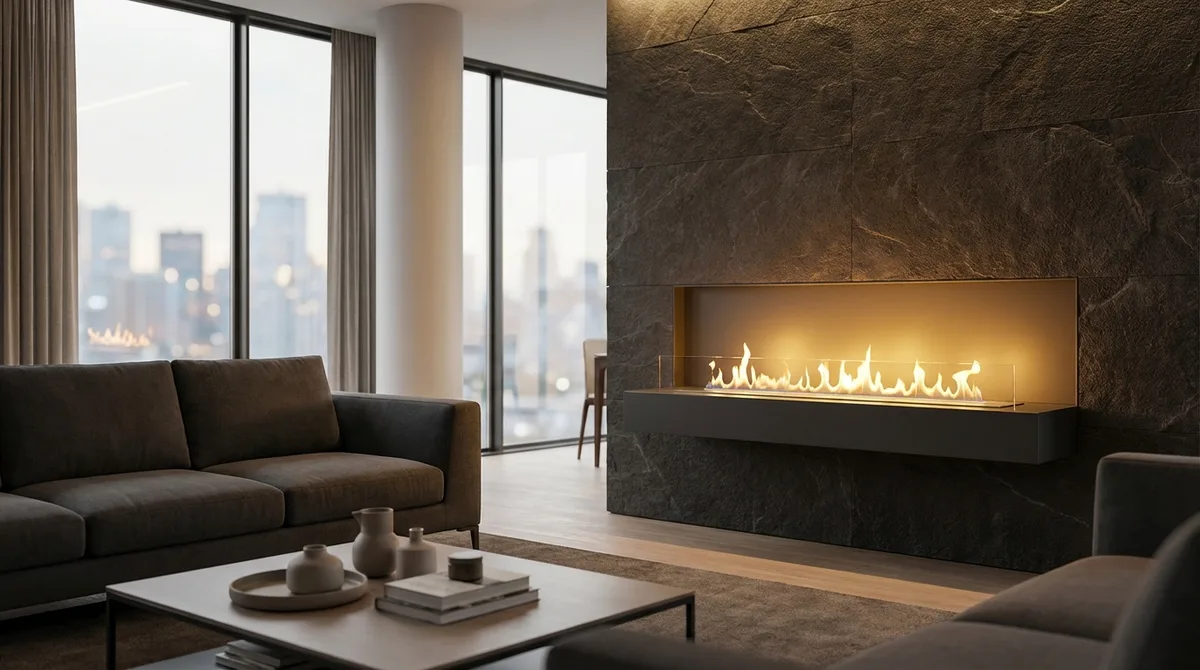
Why ethanol fireplaces are ventless
A vent exists to carry smoke and flue gases out of a room. A bioethanol flame produces no smoke to carry: the fuel burns cleanly in the burner, and the fireplace is designed to run in the room as it stands. That single fact is what allows ethanol fireplaces to be built into walls, stood on floors and hung on walls in buildings that have no chimney at all, including apartments and converted spaces.
Ventless does not mean thoughtless. The flame still consumes oxygen from the room and still gives off heat and water vapour, so the room itself becomes part of the specification. Room size, ventilation habits and how long the fire runs at a time are the questions that replace the flue questions a wood or gas fire would ask.
What ventless changes in a project
Without a flue, the fireplace can go where the design wants it: a divider wall, a media wall, a room with no chimney breast. The installation work shrinks to the construction the unit sits in — an opening for an insert, a build-out for a firebox, fixings for a wall piece. Projects that would have spent their budget on flue work spend it on the fireplace and its surround instead.
Ventless also changes the order of decisions. There is no flue route to fix first, so the fireplace form can be chosen on design grounds and the room checks made against the chosen form. Buyers used to chimney-first planning sometimes find the freedom disorienting; the room-confirmation checklist below is the replacement discipline.
Room checks before a ventless order
Settle the room before the model. The room the fire will burn in, its size relative to the flame, and how the room is aired in normal use are the three facts the confirmation needs. A large open-plan space and a small closed study ask different things of the same burner, and the model choice follows the room, not the other way round.
Fuel handling is the fourth check. Bioethanol arrives in bottles and is poured into a cool burner; where the bottles are stored and who refuels the fire are household or venue routines worth deciding before the fireplace arrives. The safety guide in the blog covers refuelling and cooling routines in full.
Ventless across the forms
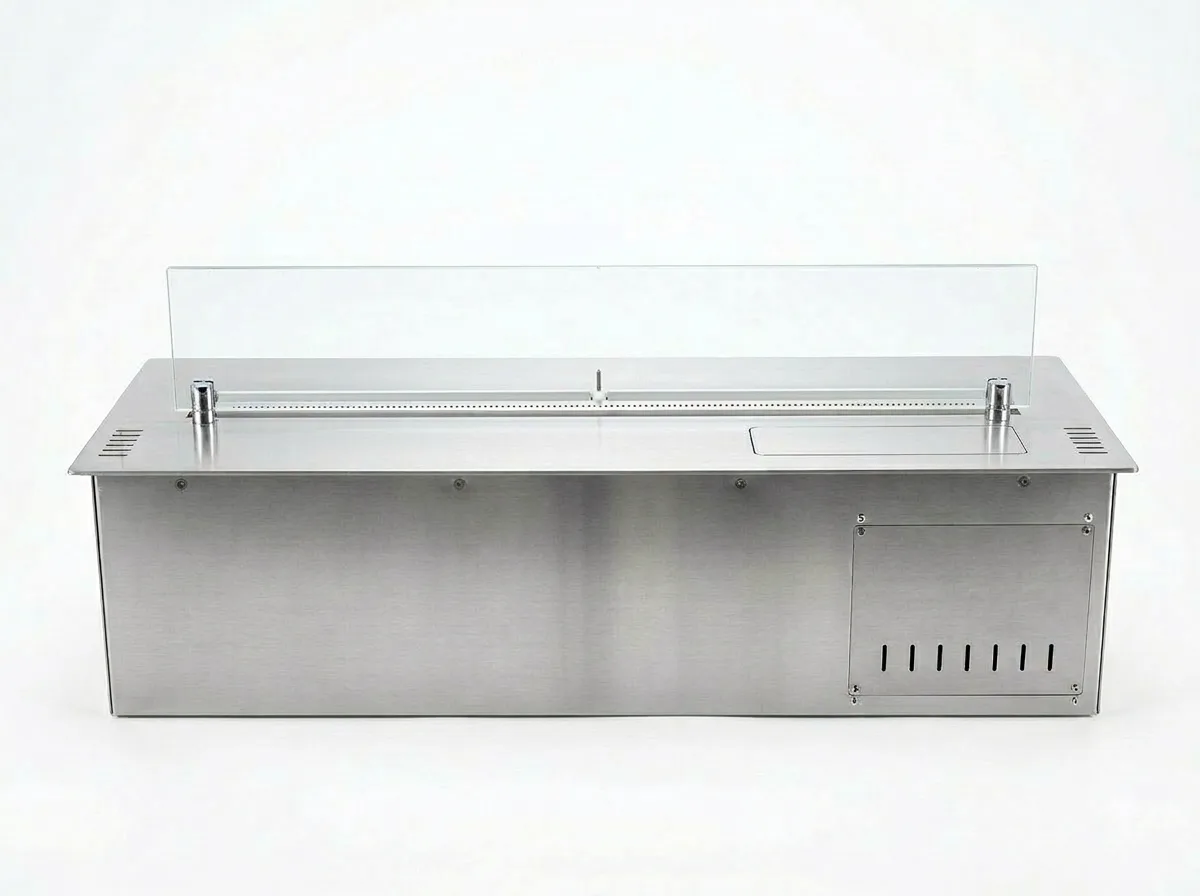
Every ethanol form in the range is ventless: inserts, fireboxes, freestanding and wall-mounted models, and the tabletop pieces. The word describes the family, not a special sub-range. A buyer searching on the ventless term is usually asking the installation question — can a real flame go in a room with no chimney — and the answer shapes the whole list that follows.
Where a room cannot take a real flame at all, the same ventless logic leads to the flame-effect families: water vapor and electric fireplaces also need no vent, and they remove combustion from the room entirely. The comparison page sets the flame types side by side for buyers weighing that choice.
Related pages
Send an inquiry
Send your product list and quantities for a quote. Note the room each ventless item is for, beside the item.