Ethanol fireplaces
Freestanding Ethanol Fireplaces
A freestanding ethanol fireplace stands in the room as a finished piece: real bioethanol flame, no chimney, and no building work to install it.
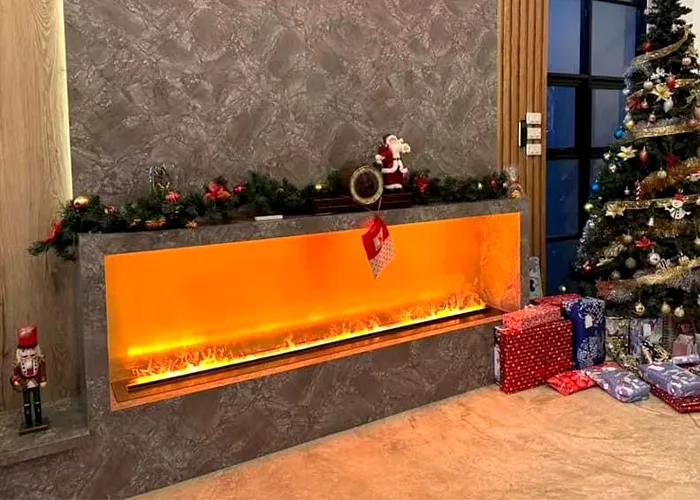
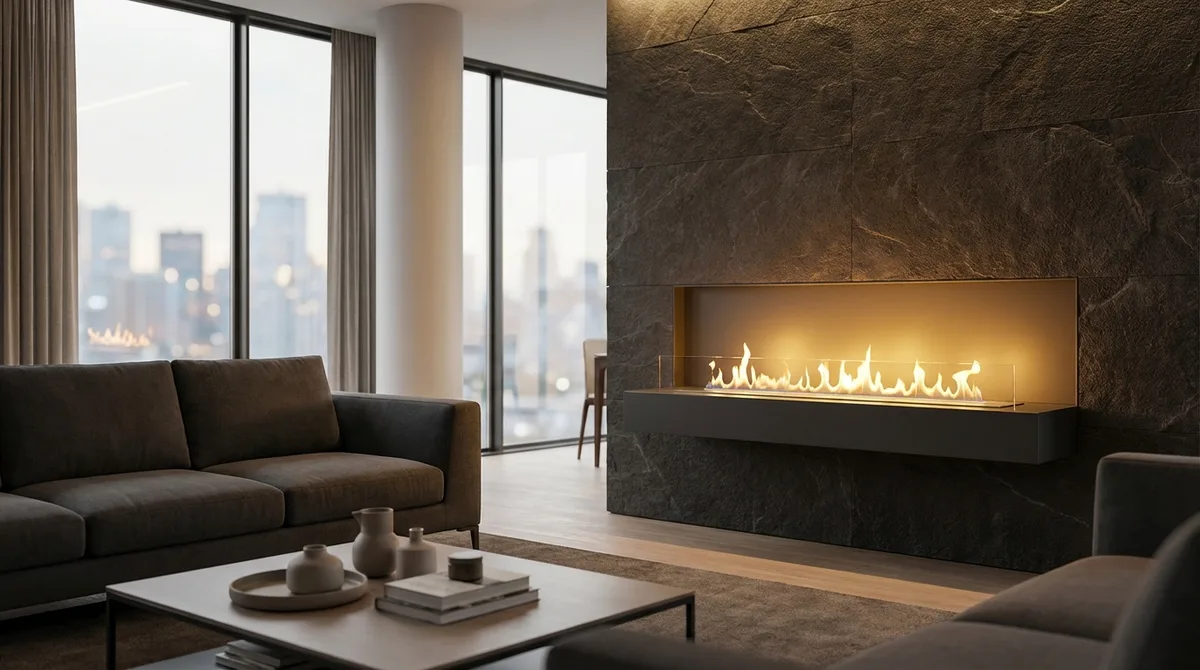
What the freestanding form covers: freestanding ethanol fireplaces
Freestanding models carry the whole fireplace in one finished unit that is placed on the floor and used where it stands. Nothing is built into the wall, nothing is cut into the floor, and no flue is needed, because the bioethanol burn is smokeless. The form suits finished rooms, rented spaces, and projects where the fireplace is furniture rather than construction.
The trade the form makes is presence for permanence. A freestanding piece can be moved when the room changes, and it can be taken out of a room entirely; in exchange it occupies floor space as furniture does, and its proportions are fixed at the factory rather than fitted to a wall. Buyers choosing the form usually know the spot before they choose the model.
Placing a freestanding fireplace
Placement is the main decision on a freestanding list. The usual spots are a room divider position between seating areas, a wall-adjacent position where building in was not possible, and a focal position opposite the main seating. Each spot implies a viewing pattern: a divider piece is seen from two sides, a wall piece from the front, a focal piece from across the room.
Clearances and surfaces belong to the placement decision. The floor material under the unit, the distance to soft furnishings, and the route fuel takes from storage to the burner are everyday questions that are easier to settle on paper than after delivery. Note the floor material and the intended spot in the inquiry, beside the item, and the confirmation covers them once.
Freestanding beside built-in
Projects often mix the forms: a built-in feature in the main room, freestanding pieces in secondary rooms where building work is not justified. The flame and the fuel are the same across the mix, so the household or the venue learns one routine. What differs is the confirmation list — openings and widths for the built-in items, spots and floor materials for the freestanding ones.
Where the same model repeats across rooms, group the inquiry by spot rather than by room name: one line for divider positions, one for wall positions, each with its quantity. The grouping keeps the confirmation about placement types, which are few, instead of room names, which are many.
Confirming placement before the order
| Point | What to confirm |
|---|---|
| Intended spot | Divider, wall-adjacent or focal position |
| Floor material | The surface the unit will stand on |
| Viewing pattern | Seen from the front, or from two sides |
| Control | Manual or remote, by model |
The placement table is short because the form is simple; its four points are the whole confirmation for a freestanding item. Answer them in the inquiry and the order needs no second round of questions about where the piece is going.
Freestanding pieces also serve as the range's trial form. A venue unsure whether a room wants a fire at all, or a household between renovations, can place a freestanding fireplace, live with a real flame for a season, and let the experience decide whether a built-in feature follows. The trial costs no construction, and the piece itself remains useful wherever the final plan puts it — which is more than can be said for most experiments in a room's design.
Related pages
Send an inquiry
Send your product list and quantities for a quote. Name the intended spot and the floor material beside each freestanding item.