Ethanol fireplaces
Wall Mounted Ethanol Fireplaces
A wall mounted ethanol fireplace fixes the flame to the wall: a real bioethanol fire in a shallow unit or a wall-mounted firebox, with no chimney behind it.
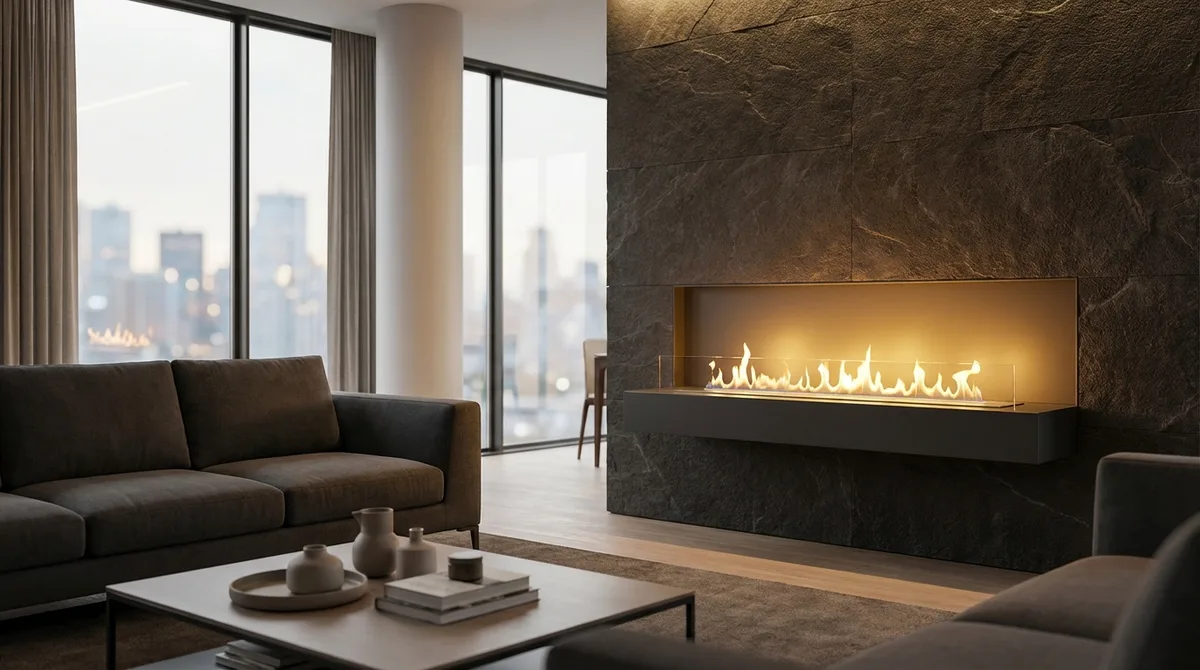
What the wall-mounted form covers: wall mounted ethanol fireplaces
Wall-mounted models put the fireplace on the wall instead of in it or on the floor. The published range includes wall-mounted fireboxes among its built forms, and the form as a whole suits rooms where floor space is spoken for and the wall is free: apartments, dining rooms, reception areas, and seating arranged against a single wall. The burn is bioethanol and smokeless, so the wall needs no flue.
Two constructions sit under the one name. A surface unit hangs on the wall as a finished shallow box. A wall-mounted firebox is built into a shallow construction on the wall face. The difference shows in the depth the piece takes from the room and in the work the wall needs, and the inquiry should say which construction each item takes.
The wall itself: material and construction
A wall-mounted order stands or falls on the wall. Its material, its construction and its load path decide which models can be fixed to it and how. Masonry and stud walls take fixings differently, and a shallow built construction has to be planned where the wall cannot carry the piece directly. Name the wall material in the inquiry, beside the item, and the fixing question is settled in the confirmation rather than on the ladder.
Height is the second wall question. A wall-mounted flame is usually set for seated viewing, and the centre line of the flame relative to the seating is a design decision the buyer makes once. State the intended mounting height where it is already fixed by the room — under a screen, above a bench, centred on a panel — so the model is chosen against the real position.
Wall-mounted beside the other forms
Against the freestanding form, wall-mounting gives up movability and gains floor space. Against the built-in form, it gives up the flush finish and gains a shallow, simpler installation. Buyers who start from the room rather than the product usually land on the wall form when the room is finished and furnished and the wall is the only surface left to work with.
In mixed orders the wall-mounted items are usually the secondary fires: the main room takes a built-in feature, the dining room or the corridor takes a wall piece. Group them as their own section of the list, with the wall material noted once per wall type rather than once per room.
Confirming the wall and the opening
| Point | What to confirm |
|---|---|
| Wall material | Masonry, stud or other construction, per item |
| Construction type | Surface unit, or firebox in a shallow build-out |
| Mounting height | The flame centre line, where the room fixes it |
| Control | Manual or remote, by model |
The four points in the table are the confirmation set for a wall-mounted item. Wall and construction come first because they can rule a model out; height and control follow because they choose between the models that remain.
A wall-mounted piece is also the form most likely to be added to a room that already has its furniture, which makes one further note useful in the inquiry: what hangs or stands near the intended position. A screen above, shelving beside, a doorway's swing across the wall — neighbours like these decide small questions of size and fixing that are tedious to settle after the unit arrives and simple to settle before it is confirmed.
Related pages
Send an inquiry
Send your product list and quantities for a quote. Put the wall material and the construction type beside each wall-mounted item.