Ethanol fireplaces
Linear Ethanol Fireplaces
A linear ethanol fireplace stretches the flame into one long row. The form runs from standard built-in lengths to ultra-long models made for wide, minimalist feature walls.
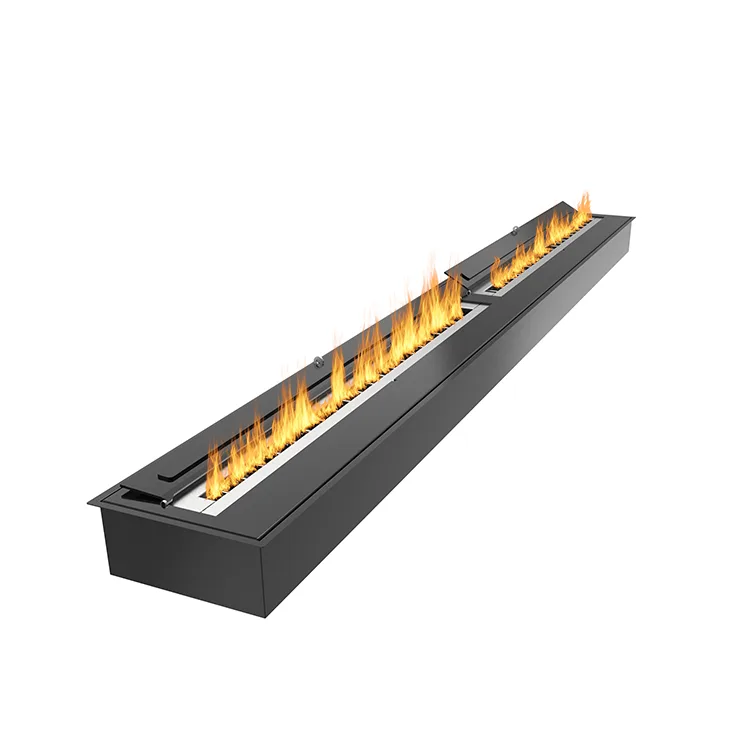
What the linear form covers: linear ethanol fireplaces
The linear form is defined by the flame shape: a single extended row of real flame, low and wide, instead of a compact firebox cluster. It suits the long, low proportions of contemporary interiors, where the fireplace is read as a line of light across a wall rather than as a box set into it. The fuel is bioethanol, the burn is smokeless, and no chimney is required at any length.
Linear models are built-in pieces. The unit sits inside the wall construction or a purpose-built surround, and the room sees the flame row and its guard. At the longest sizes — the ultra-long models promoted for minimalist interiors — the fireplace becomes the main feature of the room, and everything else in the inquiry follows from its width.
Length and layout: linear ethanol fireplaces
Length is the first decision on a linear list. Standard lengths cover most feature walls; ultra-long runs are chosen where the wall is wide and the seating faces it along its length. A flame row that is too short for its wall reads as an insert that lost its way, so buyers usually size the fireplace to the wall furniture it sits with: the media unit, the bench, or the room divider it is built into.
Layout follows length. A linear fireplace can sit centred on a wall, run beneath a screen or a shelf, or stretch along a divider between two seating areas. Each layout changes the viewing angles and the guard requirements, so the layout belongs in the inquiry as a note beside the item, in plain words, even when a drawing follows separately.
The burner inside a linear fireplace
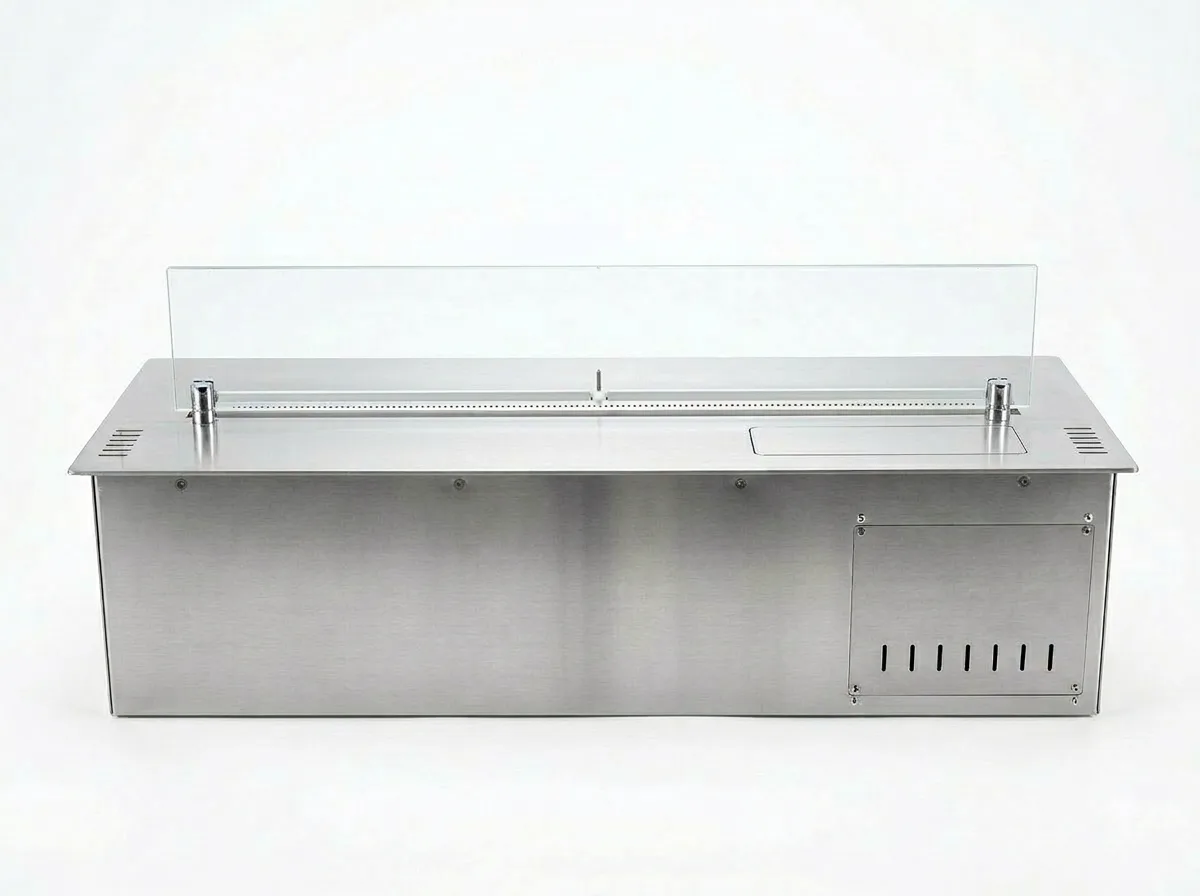
A linear flame row is produced by a linear burner, and the same burners are supplied on their own for custom surrounds. A buyer choosing between a complete linear fireplace and a burner set into a bespoke surround is choosing who builds the housing: the factory, as a finished unit, or the project, around a supplied burner. Both routes are regular orders; the inquiry should say which route each item takes.
Control divides the same choice further. Smart linear models adjust by remote and app; simpler burners are adjusted at the unit. On a wide wall the fireplace is rarely within arm's reach of the seating, which is why remote control is the common specification at the long end of the range.
Confirming a linear order
| Point | What to confirm |
|---|---|
| Overall width | The flame row width the wall is planned around |
| Housing route | Complete unit, or burner into a custom surround |
| Control | Remote and app, or adjustment at the unit |
| Guard and finish | Guard type and the surround finish the unit sits in |
The table above is the checklist the inquiry should answer for each linear item. Width and housing come first because they fix the product; control and finish follow because they fix the configuration of that product. Quantities sit beside each item, and a project with two different wall widths carries two lines, not one averaged line.
Related pages
Send an inquiry
Send your product list and quantities for a quote. Put the width and the housing route beside each linear item.