Water Vapor vs Electric Flame Effects
Flame-effect fireplaces divide by how the flame is made: water vapour lit from within, an electric flame image, or a holographic projection over real media. Each reads differently, and suits different rooms.
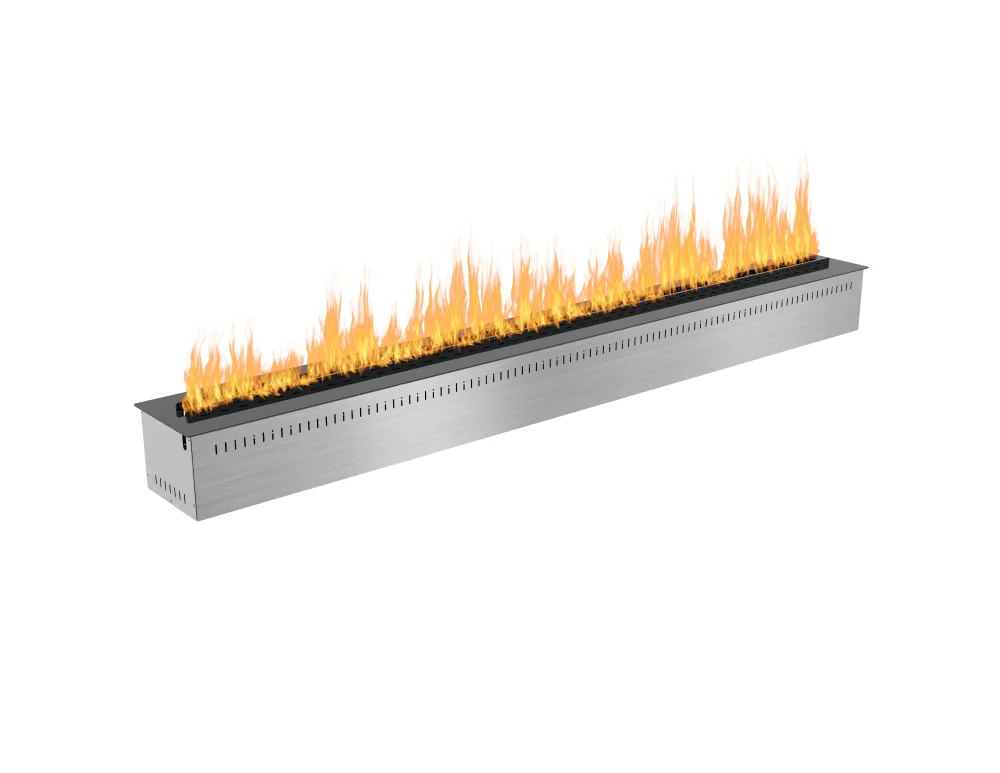
Three ways to make a flame without fire
A flame-effect fireplace is an appliance that produces the sight of a fire with nothing burning. The category is large and retail-noisy, but its technologies are few. A water vapor fireplace turns water into a rising mist and lights it. An electric fireplace renders the flame as light and motion on or behind a screen or bed. A holographic fireplace projects the flame image into the firebox, over physical log media, so the image and the objects share the same space.
Buyers comparing the three are not comparing better and worse versions of one thing. They are comparing three different physical arrangements, each with rooms it convinces in and rooms it does not. This guide takes them in turn — how each flame looks, what each asks of the room, and where each is usually specified.
The water vapor flame
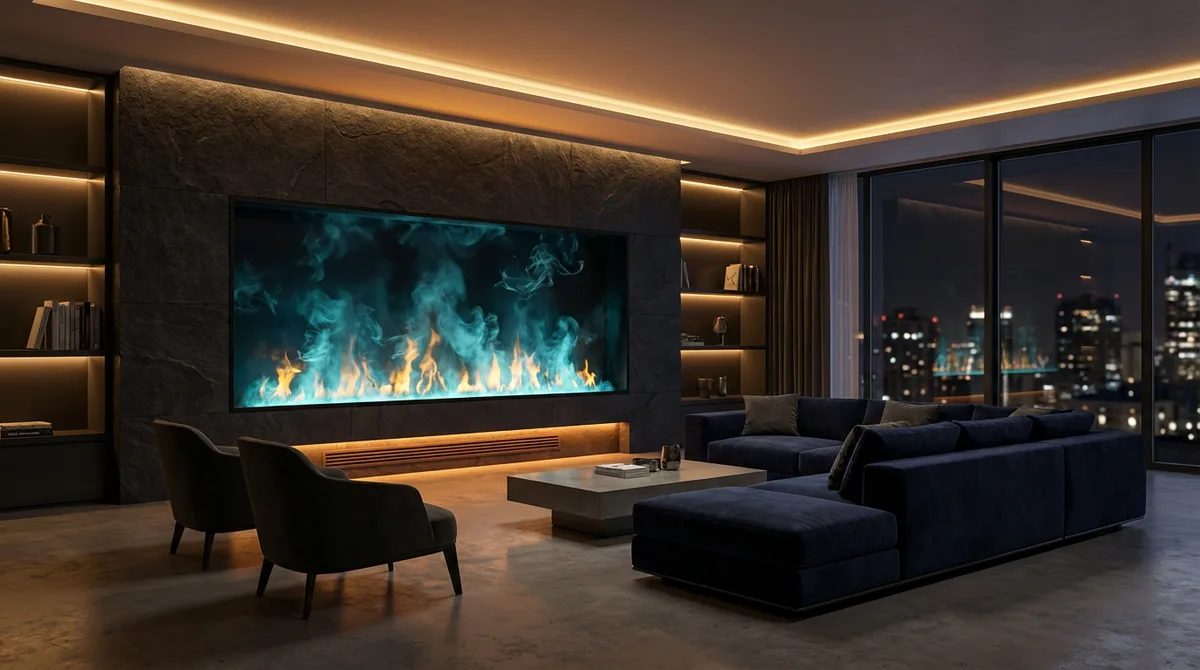
The vapour flame is a physical presence: fine water mist rising through light, moving the way flame moves because it is matter in motion, not a recording of it. It has depth from every angle — the 3D quality the vapor family is named for — and it is cool to the touch while it runs. Guests lean close to it, children put hands near it, and nothing bad follows, which is the effect's defining social fact.
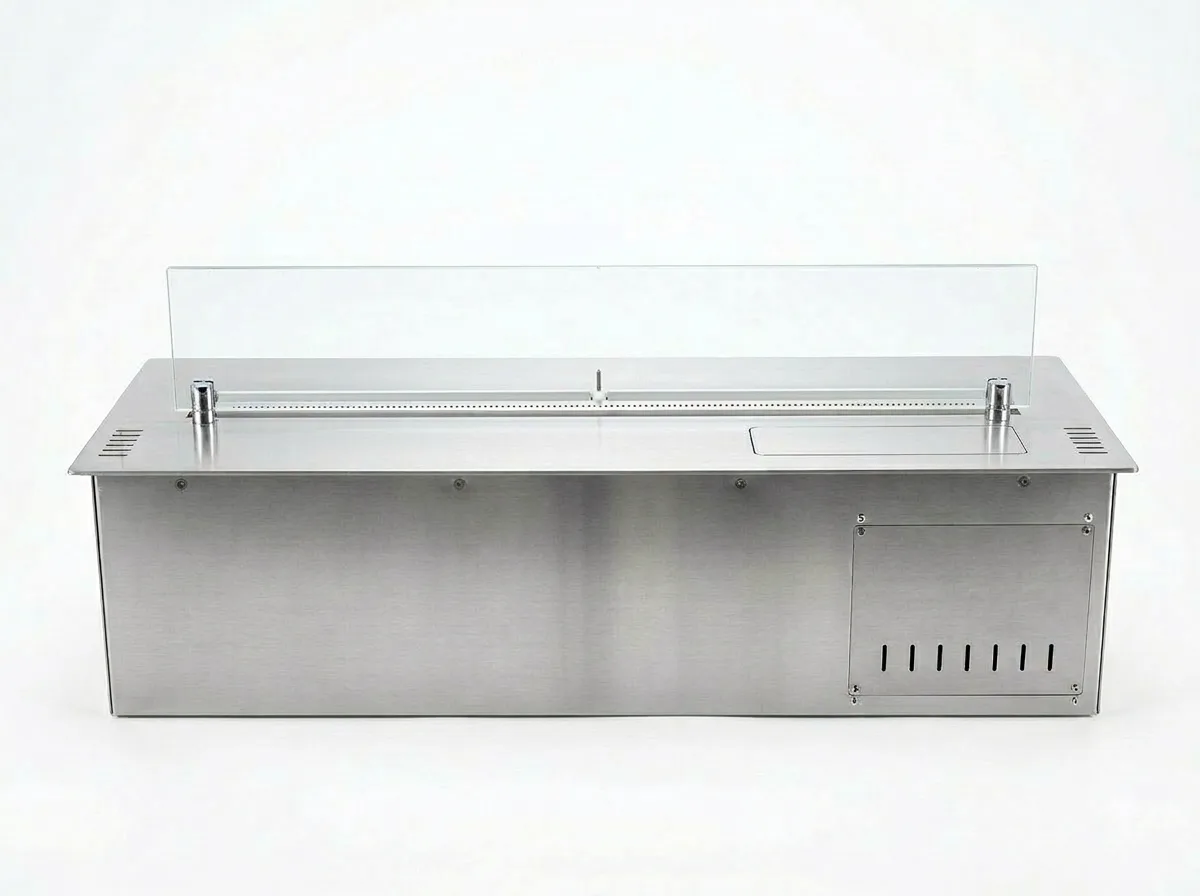
Its asks are a water tank and a power supply. The tank sets running time between refills, and tank class is the vapor insert's core specification. Its flame colour is a natural palette on standard models, widening to coloured flames on the family's colour models, where the flame becomes a lighting feature as much as a fire.
The electric flame
The electric flame is the category's workhorse: a light-based effect in an insert or a built-in unit, usually paired with a heater. It asks nothing but power, runs at a switch, and its quality varies with the maker's care — the best read as a calm fire bed at room distance, the plainest as a moving picture. It convinces at the distances living rooms actually keep, across a sofa, and it is the default choice where flame and warmth are wanted from one opening.
Its limits appear at close range and long looking: a rendered flame repeats its patterns, and a viewer sitting beside it for an evening learns the loop. For feature walls watched from seating, that limit rarely decides anything. For a flame that guests gather around and watch, it can, and those projects usually move to vapour or holography.
The holographic flame
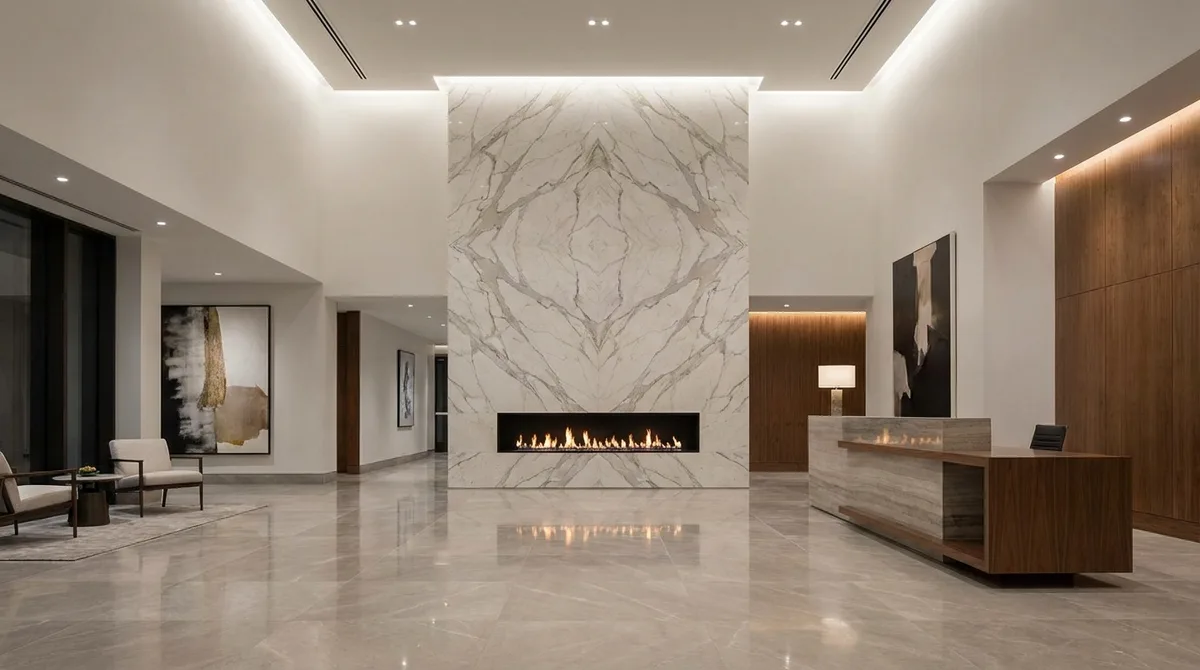
The holographic effect projects the flame into the box, over real logs, using a beam-splitter arrangement: the image occupies the same depth as the media, appearing in front of, between and behind the logs. Of the three effects it layers most like a real fire, because the eye is given the one thing flat effects cannot offer — an image that shares space with objects.
Holographic models in this range run at 0 heat, as pure ambience. Their questions are geometric: viewing distance, viewing angle, the size of the flame against the seating. They are specified for lounges, dining rooms, receptions and events — rooms run for atmosphere — and the commercial ambience guide takes those rooms in detail.
Heat: wanted, or not
Heat separates the effects as sharply as looks do. Electric inserts commonly carry heaters, and vapor models with heaters exist as a distinct part of the vapor range; the vapour flame and the holographic flame are themselves cool. A buyer should therefore state the heat requirement before the effect, because it narrows the field immediately: heat wanted points to heater models in either effect family; ambience only opens all three.
Heat also has a seasonal shape. Rooms that want the flame all year and heat only in winter are served by units whose flame and heater run independently — the standard arrangement — and the confirmation should say so where it matters, so the product is checked for independent operation rather than assumed to have it.
Running and keeping
The vapour effect consumes water and asks for tank refills on a rhythm set by its class and its hours. The electric and holographic effects consume only power. Venues running effects all day weigh that difference honestly: water is a small daily task, power is none, and the vapour flame's presence is the consideration on the other side of the scale.
Control is common ground: remote across the families, app and WiFi on the connected lines, smart-home platforms over both. An effects order integrated into a building system follows the integration guide's discipline — the platform named per group of items — whichever effect is chosen.
Choosing, in one pass
Choose by the room's distance and duration. Watched from seating, with heat wanted: an electric or vapor insert with a heater. Gathered around, close, for long hours: the vapour flame. Watched as a layered fire image in an ambience room: the holographic series. Stated that way, most projects decide in one pass, and the remaining questions are sizes and tanks.
Effects in mixed interiors
Real interiors rarely standardise on one effect. A hotel may run vapour flames in the spa, where guests sit close for hours, electric inserts with heaters in the suites, where warmth is part of the product, and a holographic feature in the bar, where the layered image carries the room. Each choice is the same method applied to a different room: distance, duration, heat, audience. A buyer specifying a whole property should expect the answer to be a mixture, and should be suspicious of any single-effect answer that arrives before the rooms have been described.
Mixtures carry one housekeeping rule: the family is marked on every line of the list, because the families' confirmations differ in kind, not just in detail — tanks and running hours for vapour, openings and heater requirements for electric, viewing geometry for holographic. A mixed list that keeps its families legible is confirmed as quickly as a single-family one; a mixed list that blurs them is confirmed eventually, after the questions the blur created have been asked and answered one by one. The discipline costs a word per line — the family name, written where the product is named — and it is the cheapest insurance in the whole specification.
Related pages
Send an inquiry
Send your product list and quantities for a quote. State the heat requirement and the viewing distance beside each effect item.