Ethanol Burner Types
Every ethanol fire burns from a burner, and burners divide by shape and control: linear, rectangular, round and double-deck forms, packaged inserts, and smart burners that join the smart line.
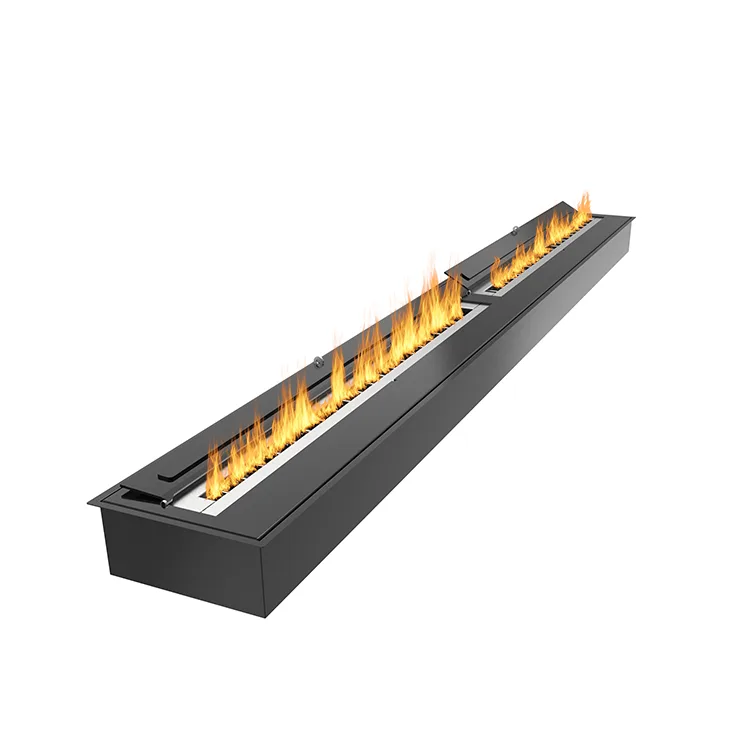
The burner is the fire
Strip any ethanol fireplace down and the burner is what remains: the reservoir that holds the bioethanol, the opening the flame rises from, and the mechanism that lights, adjusts or shuts the fire. Inserts, fireboxes, fireplaces and fire pits are housings of various ambition around that one working part. Buyers who understand the burner types can read the whole catalogue through them, because every product in the range is a burner plus a decision about its housing.
Burners are also sold as products in their own right — the component route, for projects building their own surrounds. This guide takes the types in turn: the flame each makes, the construction each serves, and the confirmation each needs. It ends with the smart burner, which changes not the flame's shape but its government.
Linear burners
A linear burner draws the flame as a single row. It serves long, low constructions: media walls, linear surrounds, wide fireboxes, the feature benches of contemporary interiors. Its specification is its length, matched to the recess it drops into, and its surround's material is part of its brief because the construction around a long flame row is the burner's working environment.
Linear is the form most often taken in its smart version. A long row built into finished joinery is rarely within comfortable reach, and a fire lit often, by staff or by a household from the sofa, earns its remote and app control. The manual linear burner remains the right specification for occasional fires lit by someone standing at them.
Rectangular burners
A rectangular burner makes a block of flame: the squared reservoir for squared constructions. It is the traditional firebox burner, suited to chambers drawn as rectangles and to surrounds whose geometry is orthogonal. Where the linear form stretches a flame along a wall, the rectangular form concentrates it in a hearth-like field, and the choice between them is usually made by the architecture before the buyer opens the catalogue.
Rectangular burners also serve as the working part inside many complete inserts and boxes, which is why the form sometimes seems less visible as a standalone product. As a component it is confirmed like the others: by its dimensions against the construction, its control type, and its quantity — with ceramic log media, where the design wants it, listed as the accessory it is.
Round burners
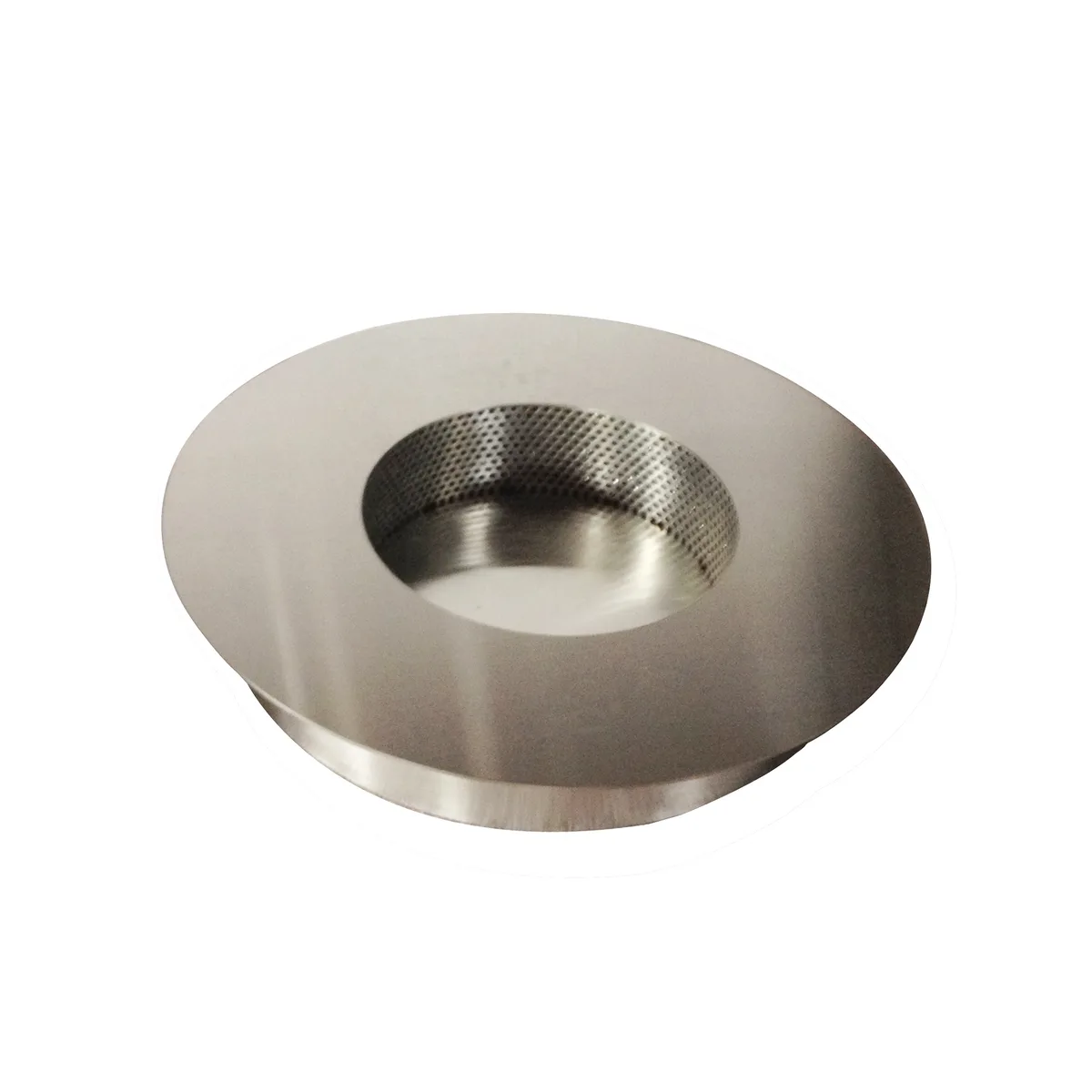
A round burner makes a ring of flame in a stainless cup form. It serves gatherings rather than walls: fire tables with seating around them, bowls, garden features and the large tabletop pieces. Its flame is watched from every side, so the form has no front — the only burner type of which that is true, and the reason it owns the outdoor and table categories between them.
Round burners are confirmed by arrangement: burners per construction, constructions per order, and the material surrounding each. A long table with two rings and a terrace with six bowls are different orders behind the same product name, and the arrangement numbers are what separate them in a confirmation.
Double-deck burners
The double-deck burner layers the flame: a deeper fire bed with the flame presented over a stepped construction, for surrounds designed around a more sculptural fire. It is the least standardised of the forms and the most design-led; its buyers arrive with a construction already drawn, and its confirmation is correspondingly bespoke — dimensions against the drawing, in the manner of the firebox briefs.
Because the double-deck is a feature form, it is often weighed against dressing a standard burner with decorative media. The two are different commitments: media dresses a flame, the deck rebuilds it. A buyer undecided between them should say so in the inquiry, where the construction can be discussed against both routes at once.
Burner inserts
A burner insert packages a burner as a finished drop-in unit: reservoir, flame opening and controls assembled as one assembly, leaving only the surround to the project. It is the middle route between a bare burner and a complete fireplace insert — bespoke housing, factory working parts. The recess is its key measurement, and access for fuelling and service is designed into the surround before the surround is closed.
Burner inserts suit the projects that dominate custom work: one-off features in venues, designers' pieces, renovations where the surround is the architecture. Their confirmation mirrors a complete insert's, with the recess dimensions and the surround material taking the place of the opening measurements.
Smart burners
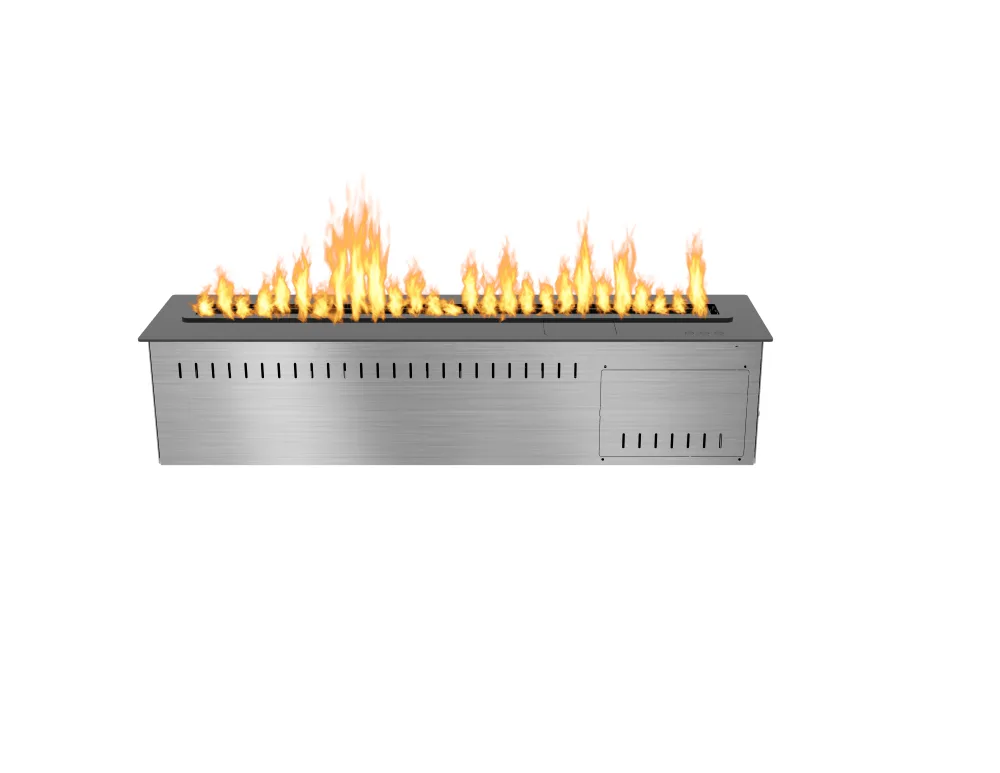
The smart burner is the component form of the smart line: an automatic burner with electronic ignition and flame control, run by remote and app and built to join smart-home systems. It gives a bespoke surround the operation of a smart fireplace. Its brief therefore carries two families of fact at once — the construction's dimensions and material, and the control system's name — and both belong in the same line of the inquiry.
Smart burners are the usual answer where a one-off feature must be run by people who did not build it: hotel staff, venue teams, a household's guests. The fire's government — who lights it, from where, on what schedule — is a design input like any other, and the smart burner is where that input becomes a product choice.
Choosing a burner type
Choose by the construction's geometry first: a row, a block, a ring, a layered bed. Choose the packaging second: bare burner, burner insert, or the burner inside a complete product. Choose the government last: manual at the unit, or smart under remote and system control. Three choices, in that order, identify any burner in the family — and they are, not coincidentally, the fields an inquiry fills for any burner.
Burners inside complete products
Most burners are never bought as burners. They arrive inside complete inserts, fireboxes and fireplaces, chosen by the product's name and confirmed against the product's opening. Knowing the types still pays: it explains why two inserts of the same outside size behave as different fires, why a firebox's flame has the shape it has, and what a buyer is really specifying when a bespoke surround is drawn — the burner first, and the architecture around the burner second, in that order, however the drawings are presented.
It also disciplines replacement and extension work. A surround built around a linear burner keeps its geometry for life; a second phase of the same project repeats the type, not merely the look. Buyers extending a feature should name the burner type from the original order in the new inquiry, so the phases match in the flame and not only in the furniture — the one kind of mismatch that no photograph of the finished room will forgive.
Related pages
Send an inquiry
Send your product list and quantities for a quote. Name the shape, the packaging and the control beside each burner.